This course introduces the key concepts, tools, and principles of strategy formulation and competitive analysis. It is concerned with managerial decisions and actions that affect the performance and survival of business enterprises. The course is focused on the information, analyses, organizational processes, and skills and business judgement managers must use to devise strategies, position their businesses, define firm boundaries and maximize long-term profits in the face of uncertainty and competition.
The course takes a general management perspective, viewing the firm as a whole, and examining how policies in each functional area are integrated into an overall competitive strategy. The key strategic business decisions of concern in this course involve selecting competitive strategies, creating and defending competitive advantages, defining firm boundaries and allocating critical resources over long periods. Decisions such as these can only be made effectively by viewing a firm holistically, and over the long term.

- Teacher: Samuel Arkaifie
- Teacher: Rudolph Asomaning
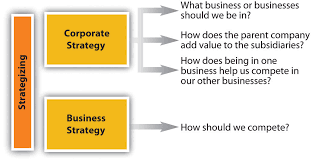
Corporate Strategy is intended to be an exciting and challenging course for undergraduate students. It is first and foremost a course about "strategy" and about "managing for success." You will be exposed to both the current theory and the practice of Strategic Management. Particular emphasis will be placed on how Strategic Management concepts can aid in analysing, formulating, and implementing business strategy. This course is also designed to encourage you to apply the knowledge you have acquired in previous coursework to real-life management issues. In particular, you will be introduced to issues confronted by upper-level managers who are concerned about the overall performance of a firm through a strategic management simulation.
The intent of the Corporate Strategy course is that each of you will be able to respond successfully to changing environments in your present or future jobs as managers and professionals in the business world. The knowledge acquired can be used in all types of organizations, whether large or small, for-profit or not-for-profit, corporate-level or business unit level, and whether a new venture or an established organisation. The focus will be on the Strategic Management process. We will discuss (1) how different industry conditions support different types of strategies, (2) how industry conditions change and the implications for strategic management, and (3) how organizations develop and maintain capabilities that lead to sustained competitive advantage. We will pay particular attention to how technologies and globalization forces are changing both industry conditions and the strategic options open to organizations.
- Teacher: Eugene Owusu-Acheampong